
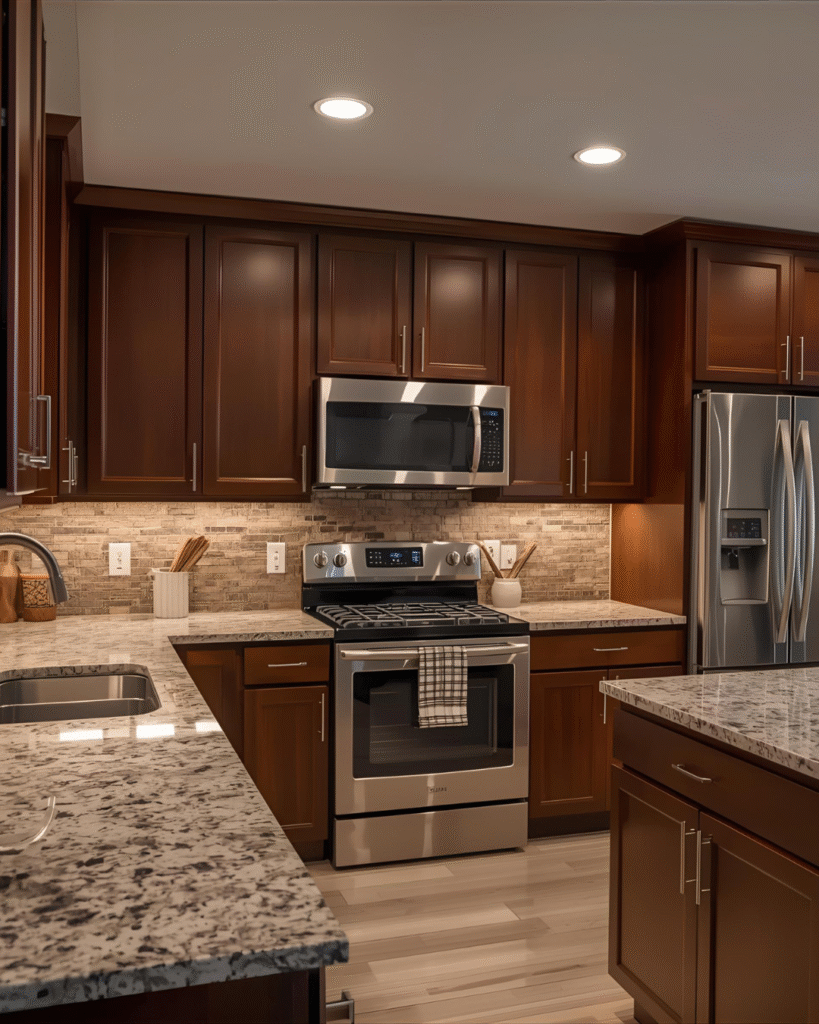
Kitchen Extension or Separate Kitchen Renovation? Which Makes More Sense for Your Horsham Home?
When your Horsham kitchen isn’t working — too small, badly laid out, dated beyond refreshing — you face a choice that determines how much you spend, how long the project takes, and how dramatically the result changes your home. Do you extend the kitchen to create more space, or renovate the existing room to make better use of what you already have?
The answer isn’t always obvious. Some kitchens are perfectly sized but poorly designed, and a renovation transforms them without the cost of building new. Others are fundamentally too small for how the household uses them, and no amount of clever redesign compensates for the missing square metres. Most sit somewhere in between, where either approach could work depending on your budget, your priorities, and what you want the finished kitchen to deliver.
This guide compares the two approaches honestly — costs, timescales, disruption, and results — to help you decide which makes more sense for your Horsham home.
What Does Each Option Actually Involve?
A kitchen renovation works within the existing room. The old kitchen is stripped out, the walls are replastered where needed, new electrics and plumbing are installed to suit the new layout, and the new kitchen is fitted with tiling, flooring, and decoration to complete the room. The footprint stays the same — you’re improving what’s inside the four walls rather than moving them.
A kitchen extension adds new space. A rear or side extension is built to enlarge the kitchen footprint, often combined with removal of the internal wall between the kitchen and dining room to create one open-plan kitchen-diner. The extension provides the additional square metres, the wall removal provides the open-plan flow, and the new kitchen is fitted across the entire enlarged space.
The distinction matters because the two approaches solve different problems. A renovation fixes a kitchen that doesn’t work well. An extension fixes a kitchen that doesn’t have enough room. Understanding which problem you’re actually trying to solve is the starting point for making the right decision.
Cost Comparison
A kitchen renovation in Horsham typically costs between £8,000 and £25,000 depending on the specification and whether structural work is involved. A straightforward replacement in the existing layout sits at the lower end — new units, worktops, tiling, flooring, and decoration without moving any services or altering the structure. A renovation with layout changes, new plumbing and electrical runs, replastering, and higher-specification finishing moves toward the middle and upper end. Add structural wall removal to open the kitchen into the dining room and the cost approaches the top of the range.
A kitchen extension in Horsham typically costs between £30,000 and £60,000 including the extension build and the new kitchen fitting. A modest single storey rear extension of three metres with a mid-range kitchen sits at the lower end. A larger extension of four to six metres with structural wall removal, bi-fold doors, underfloor heating, and a high-specification kitchen reaches the upper end. The extension cost includes groundwork, foundations, brickwork, roofing, steelwork, plastering, and all associated building work in addition to the kitchen itself.
The gap between the two approaches is significant — roughly £20,000 to £35,000 for many projects. That’s the premium you pay for additional space rather than improved use of existing space.
When a Renovation Makes More Sense
A renovation is the right choice when your kitchen has adequate floor area but the layout, specification, or condition lets it down. Several situations point toward renovation rather than extension.
If your kitchen is a reasonable size but the layout wastes space, a renovation with repositioned services can transform how the room works without adding a single square metre. Moving the sink under the window, repositioning the cooker for better workflow, or adding a breakfast bar peninsula changes the daily experience of using the kitchen dramatically.
If the kitchen needs updating but the dining room arrangement works for your family, there’s no reason to knock through walls and create open-plan living that you don’t actually want. Not every household benefits from open-plan — some prefer the separation between cooking and living spaces, and a renovation respects that preference while delivering a modern, functional kitchen.
If budget is the primary constraint, a renovation delivers a transformed kitchen for half to a third of the extension cost. That’s a new kitchen you can enjoy now rather than an extension you save for over several more years.
If your property has limited potential for extension — a short garden, restricted rear access, planning constraints, or conservation area restrictions common across parts of central Horsham — a renovation maximises what you have rather than fighting against what you can’t build.
When an Extension Makes More Sense
An extension becomes the right choice when the fundamental problem is space rather than specification. Several situations point toward extending rather than renovating.
If your kitchen is genuinely too small for how your family uses it, no renovation changes that. A galley kitchen in a Victorian terrace through Horsham’s older streets can be replastered, refitted, and redecorated beautifully, but it’s still a narrow galley kitchen at the end of the project. An extension provides the physical space that a renovation cannot.
If you want open-plan kitchen-diner living — one room for cooking, eating, and family life — an extension combined with wall removal is usually the route to achieving it. The extension provides the additional floor area and the wall removal creates the open-plan flow. The result is a fundamentally different ground floor rather than an improved version of the same layout.
If you’re planning to stay in the property long-term, an extension adds both space and value. The return on investment for a well-designed kitchen extension in Horsham is strong because you’re adding genuine square metres to the property — something the market values highly in an area where property prices make every additional square metre worth real money.
If your family is growing and you need the kitchen to accommodate more people, more activities, and more storage, an extension provides the room to design a kitchen that grows with your household rather than constraining it.
Timescales
A kitchen renovation typically takes two to four weeks from strip-out to completion. The first week covers strip-out, any structural work, and first fix electrics and plumbing. The second week covers plastering and drying. The third and fourth weeks cover kitchen fitting, tiling, flooring, and finishing. Simpler renovations without structural work can complete in two weeks. More complex projects with significant layout changes take closer to four.
A kitchen extension typically takes ten to sixteen weeks from breaking ground to completion. The first four to six weeks cover groundwork, foundations, brickwork, roofing, and getting the extension watertight. The next two weeks cover first fix electrics and plumbing, structural wall removal, and plastering. The final three to four weeks cover kitchen fitting, tiling, flooring, and all finishing trades. If planning permission is needed, add eight to twelve weeks for the application process before construction begins.
The difference in timescale is significant. A renovation is measured in weeks. An extension is measured in months. If getting your kitchen functional quickly matters — perhaps you’re expecting a baby, hosting Christmas, or simply can’t face months of disruption — a renovation delivers results far sooner.
Disruption
A kitchen renovation concentrates the disruption in the kitchen and potentially the adjacent dining room if structural work is involved. You lose the use of your kitchen for two to four weeks, during which a temporary setup in another room — a kettle, microwave, toaster, and a washing-up bowl — keeps the household functioning. The rest of the house remains unaffected.
A kitchen extension involves building work in the garden, structural work connecting the extension to the house, and potentially a longer period without a functioning kitchen while the extension is being built and fitted. The disruption extends beyond the kitchen into the garden and the surrounding ground floor rooms. Noise, dust, and construction traffic last for months rather than weeks.
Both are manageable with planning, but the scale and duration differ considerably. Understanding the disruption before committing helps you plan around it and set realistic expectations for the household.
Can You Combine Both?
Yes — and many Horsham homeowners do. A modest rear extension of two to three metres combined with a high-quality kitchen renovation delivers additional space and an upgraded kitchen in one project. This middle-ground approach costs less than a large extension while providing more room than a renovation alone. The extension provides the extra floor area for a dining table or a seating area while the renovation transforms the kitchen itself. Having one team build the extension and fit the kitchen means seamless coordination between the structural work and the interior finishing.
Making the Decision
The right choice depends on your specific situation. Ask yourself three questions. Is the kitchen big enough but poorly laid out? Renovate. Is the kitchen too small regardless of layout? Extend. Is the kitchen slightly too small and in need of updating? Consider a modest extension combined with a renovation.
Whatever approach suits your Horsham home, the starting point is the same — a conversation about what you need, what your property can accommodate, and what the realistic cost and timeline will be. Get in touch for a free consultation and we’ll help you decide which route makes the most sense for your situation.